English
 français
 Deutsch
 Español
 italiano
 русский
 português
 中文
中文
×
When selecting mobile operation terminals, enterprise procurement managers and field service practitioners often face a dilemma: With a price tag 2-3 times higher than standard consumer tablets, are rugged industrial tablets actually worth the investment? Are they just an overhyped marketing gimmick, or a practical necessity for specific work scenarios? Combining real feedback from over 1,200 users across 6 industries (manufacturing, logistics, power utility, field exploration, etc.) and standardized lab test data, we’ve put together a comprehensive comparison covering product positioning, performance, scenario adaptability, and total cost to help you find the best-fit device for your needs.
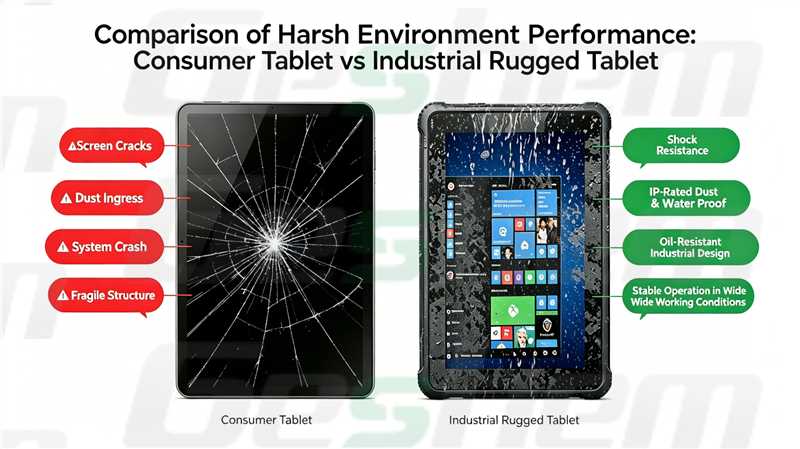
Many people assume the only difference is a thicker case, but the two product categories are built for entirely different use cases from the R&D stage, making them fundamentally distinct types of electronic devices.
(Ⅰ) Design Purpose: Consumer Tablets for Daily Entertainment, Industrial Tablets for Extreme Environments
Regular consumer tablets are built for light, low-risk use in homes and offices: Their design prioritizes slim profiles, attractive aesthetics, and strong audio-visual performance for streaming, online classes, and light office work in comfortable, controlled environments. Rugged industrial tablets are engineered from the ground up for harsh industrial and field work conditions: Water resistance, dust protection, drop tolerance, and wide temperature operability are non-negotiable core design requirements. They are purpose-built work tools for unforgiving environments, not consumer entertainment devices.
(Ⅱ) Parameter Priority: Consumer Models Prioritize Entertainment Performance, Industrial Models Prioritize Reliability
Consumer tablet upgrades focus on experience-focused specs: processor benchmark scores, screen resolution, slimness, weight, and audio quality, with little to no investment in environmental adaptability or expandable interfaces. Rugged industrial tablets follow a completely different priority list: IP ratings, shock and vibration resistance, wide operating temperature range, electromagnetic interference protection, and industrial interface compatibility come first, while slim design and premium audio-visual effects are secondary considerations.
Claiming one type is “better” without considering use case is meaningless. We conducted side-by-side tests across common scenarios, and the results may differ from common assumptions.
(Ⅰ) Durability Comparison: Rugged Tablets Outperform Even Cased Consumer Tablets by a Wide Margin
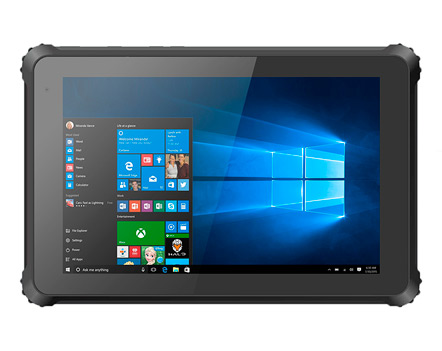
A common question from users is: Can I just buy a heavy-duty case for my regular tablet to get the same protection as a rugged industrial tablet? The short answer is no. Compliant industrial rugged tablets typically carry IP65/IP67 ingress protection ratings, pass MIL-STD-810H military standard 1.2-1.5m drop tests, and operate reliably across a wide temperature range of -20°C to 60°C. They feature sealed port gaskets, nano-coated corrosion-resistant circuit boards, explosion-proof tempered glass screens, and integrated shock-absorbing corner bumpers to withstand direct water spray, dust intrusion, drop impact, and oil corrosion. Intrinsically safe models even carry Ex explosion-proof certifications for use in oil, gas, and mining environments. Even with a rugged case, regular consumer tablets only offer basic scratch and minor drop protection. They cannot deliver sealed dust and water resistance, will shut down automatically in sub-zero temperatures, trigger overheating protection in direct summer sun, and suffer permanent motherboard damage if exposed to cutting fluid or corrosive liquids. The durability gap comes down to fundamental structural design, which an after-market case cannot replicate.
.jpg "are-rugged-industrial-tablets-better-than-regular-consumer-tablets-full-scenario-test-comparison_(2).jpg")
(Ⅱ) Functional Adaptation: Industrial Tablets Offer Far More Customization for Work Scenarios
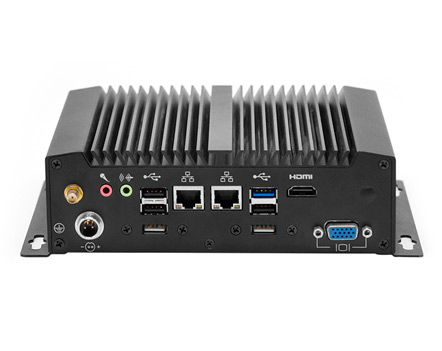
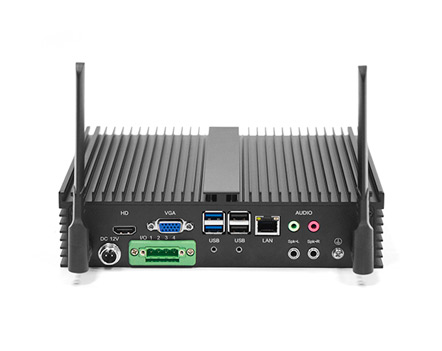
Most consumer tablets only have a USB-C port (and occasionally a 3.5mm headphone jack), with features optimized exclusively for entertainment, and almost no support for work-focused customization. Rugged industrial tablets support deep customization for industry needs: In addition to USB-C, they can be configured with RJ45 Ethernet ports, RS232/RS485 serial ports, USB-A ports, and HDMI ports. They can also integrate high-precision 1D/2D barcode scanners, NFC/RFID readers, BeiDou RTK high-precision positioning modules, fingerprint/iris recognition, and vibration-resistant vehicle mounting brackets. Their large-capacity industrial-grade batteries support hot-swap without powering off, with a cycle life of over 1,000 charges — features that make them ideal for warehouse scanning, industrial equipment debugging, field positioning, and fleet dispatch, none of which are supported by standard consumer tablets.
(Ⅲ) Total Cost of Ownership: Rugged Tablets Deliver Lower Long-Term Cost in Industrial Settings
Many first-time buyers balk at the higher upfront price of rugged tablets, but total cost calculations over the device lifecycle show they are often the more economical choice. Consumer tablets typically cost 150−150−450, but in industrial or field settings, they often fail from drops, liquid exposure, or dust damage every 3-6 months. The combined cost of replacing 2-4 units per year, plus lost productivity from downtime, adds up to far more over 3 years than a 450−450−900 rugged tablet that operates reliably for 3-5 years. Rugged tablets also typically come with faster after-sales response to minimize work disruptions from repairs.
.jpg "are-rugged-industrial-tablets-better-than-regular-consumer-tablets-full-scenario-test-comparison_(3).jpg")
(Ⅳ)Light Daily Use: Regular Tablets Deliver a Better Experience
We do not overstate the advantages of rugged tablets: For use cases like streaming at home, student online classes, light office work, or watching videos during commutes, regular tablets (weighing 300-500g, with slim profiles, vibrant screens, entertainment-optimized software, and lower price points) deliver a far better experience than rugged tablets, which typically weigh 700g or more, have thick bezels, average audio-visual performance, and higher price points. Purchasing a rugged tablet for these casual use cases is an unnecessary expense.
There is no universally “better” tablet — only the right tablet for your use case. Use these guidelines to make your decision:
Ⅰ.Scenarios Where a Rugged Industrial Tablet Is Highly Recommended
If you fall into any of the following user groups, do not opt for a consumer tablet to save on upfront cost; repeated replacements and downtime will end up costing far more:
Manufacturing floor teams: For production reporting, equipment debugging, MES system data entry, with exposure to oil, dust, and vibration;
Logistics & warehouse teams: For parcel sorting, inventory counts, inbound/outbound scanning, with high drop risk and frequent scanning needs;
Field work teams: Power line inspection, forestry survey, engineering mapping, last-mile delivery, with exposure to extreme temperatures, rain, and long periods off-grid;
Specialized scenarios: Explosive environments (oil & gas, mining), cold chain storage, in-vehicle dispatch (freight, construction equipment, public safety).
Ⅱ.Scenarios Where a Regular Consumer Tablet Is More Cost-Effective
If your use case involves no special environmental risks, a regular consumer tablet is perfectly sufficient: home entertainment, student online classes, routine light office work, casual media consumption during commutes, and other low-risk, light-use scenarios.
If you decide a rugged industrial tablet is right for your needs, do not rely solely on marketing claims of “ruggedness” — focus on these three points to avoid low-quality products:
Ⅰ.Verify Official Certifications to Avoid “Fake Rugged” Models
Legitimate rugged industrial tablets will provide publicly verifiable IP rating test reports, military standard test reports, and (for intrinsically safe models) valid Ex explosion-proof certifications. Models that only have a thick plastic case with no formal certification offer no more durability than a standard consumer tablet.
Ⅱ.Select Custom Modules Based on Actual Needs to Avoid Overpaying
Custom modules for rugged tablets come at an added cost: Skip the RTK positioning module if you do not need centimeter-level location accuracy, and skip the ultra-high-definition DPM scanner if you do not need to read barcodes on metal parts. Choose configurations aligned with your business needs to avoid unnecessary spending.
Ⅲ.Prioritize Suppliers With Industry Service Capabilities
Industrial deployments almost always require integration with existing internal systems such as WMS or MES. Do not choose a supplier based only on the lowest hardware price; prioritize providers that offer system adaptation, on-site after-sales support, and firmware updates to avoid purchasing hardware that cannot integrate with your business systems.
Rugged industrial tablets are not a “premium alternative” to regular consumer tablets — they are specialized tools built for specific work scenarios. In casual consumer settings, regular tablets deliver better value and user experience than heavy, thick rugged models. But in harsh industrial and field work environments, the reliability, functional adaptability, and long-term cost savings of rugged industrial tablets cannot be matched by consumer-grade devices. The “better” tablet is always the one built for the environment you will use it in.