English
 français
 Deutsch
 Español
 italiano
 русский
 português
 中文
中文
×
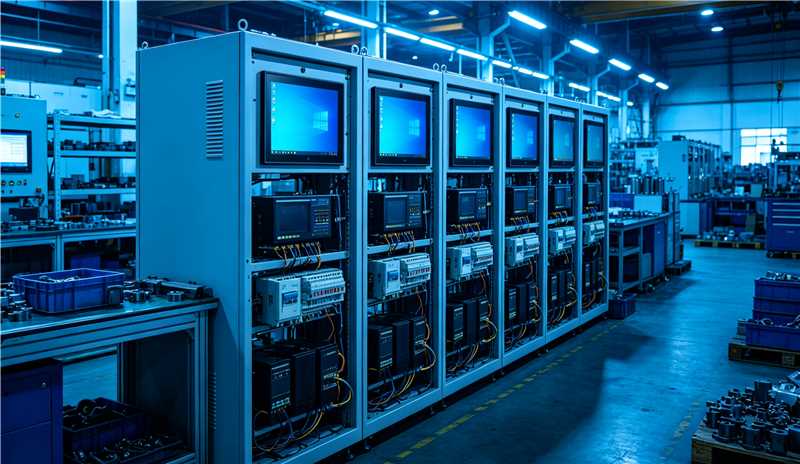
Choosing an industrial computer isn't like picking a consumer PC. The stakes are higher, the environments harsher, and the wrong decision can mean costly downtime on a production line. Whether you're upgrading a factory automation system, deploying edge computing nodes, or building an embedded control solution, the selection process demands a structured approach.
This guide walks through the critical factors that determine the right industrial PC (IPC) for your application—from processor platforms and expansion interfaces to environmental ratings and long-term availability.
(Ⅰ)Workload Analysis
Before evaluating hardware, map your workload. An IPC running SCADA software with real-time data acquisition has fundamentally different requirements than one serving as a thin client for HMI display. Key questions:
· Compute intensity: Does your application require multi-threaded processing for machine vision, or is a low-power Celeron sufficient for basic monitoring?
· I/O demands: How many serial ports, GPIO lines, or industrial bus connections (PCI, PCIe, VPX, CPCIe) do you need?
· Storage: Do you require high-write-endurance SSDs for continuous data logging, or is standard eMMC adequate?
· Network: Is gigabit Ethernet enough, or do you need 10GbE, TSN-capable ports, or redundant networking?
(Ⅱ)Environmental Classification
Industrial environments vary dramatically. An IPC in a climate-controlled server room faces none of the challenges that one mounted on a CNC machine tool encounters. Use the following classification to narrow your search:
.jpg "How_to_Choose_the_Right_IPC_for_Your_Application_(2).jpg")
(Ⅰ)Intel vs. ARM Architecture
The processor choice shapes every downstream decision. Intel platforms dominate traditional IPC applications due to x86 software compatibility and long lifecycle support. ARM-based solutions, however, are gaining traction in edge computing and embedded scenarios where power efficiency trumps raw performance.
.jpg "How_to_Choose_the_Right_IPC_for_Your_Application_(3).jpg")
(Ⅱ)Long-Term Availability Matters
Consumer processors get discontinued every 12–18 months. Industrial processors carry embedded roadmap commitments of 7 to 15 years. When you deploy 500 units across a factory, you need to know that replacement boards will be available a decade from now. Always verify the Product Change Notification (PCN) and end-of-life (EOL) policy before committing to a platform.
(Ⅰ)PCI/PCIe: The Backbone of Industrial Expansion
PCI Express remains the primary expansion interface for industrial computers. The key considerations:
Lane count: x1 for simple I/O cards (serial, GPIO), x4 for frame grabbers and data acquisition, x8/x16 for GPU or FPGA accelerators
Slot count: Rackmount IPCs typically offer 3–7 PCIe slots; compact fanless systems may have 1–2 or rely on M.2/Mini PCIe
VPX and CPCIe: For defense and aerospace applications requiring enhanced ruggedization, VPX (VITA 46) and CompactPCI Express provide hot-swap capability and defined backplane architectures
(Ⅱ)Industrial-Specific I/O
Beyond standard PCIe, industrial computers must interface with the physical world:
Serial ports: RS-232/422/485 remain essential for connecting PLCs, sensors, and legacy equipment
GPIO/DIO: Digital I/O for control signals, watchdog timers for system recovery
Isolation: Optically isolated I/O protects against ground loops and voltage spikes common in factory environments
Fieldbus support: PROFINET, EtherCAT, Modbus TCP/RTU—ensure your IPC supports the protocols in your plant
(Ⅰ)Choosing the Right Form Factor
The physical form factor determines where you can install the IPC and how much expansion capacity you have:
Rackmount (1U–4U): Maximum expansion and serviceability. Fits standard 19-inch racks. Best for control rooms and server cabinets.
Fanless Box PC: Compact, silent, no moving parts. Ideal for distributed edge computing and space-constrained installations.
Panel PC: Integrates display and computer in one unit. Common for HMI and operator stations on production lines.
Embedded/Module: COM Express, Qseven, or custom carrier boards for deeply integrated applications.
(Ⅱ)Mounting Considerations
Vibration, shock, and available space all influence mounting choices. DIN rail mounting works for compact box PCs in electrical cabinets. VESA mounting suits panel PCs on articulating arms. Rack slides are standard for server-room installations. In high-vibration environments, verify that the mounting solution includes rubber dampeners or spring-loaded fasteners.
(Ⅰ)Protection Rating (IP Rating)
IP65 means the IPC is dustproof and protects against water jets. For washing environments in the food processing or pharmaceutical industries, IP67 or IP69K may be required. However, higher IP ratings usually mean a fanless design and limited heat dissipation – a trade-off between environmental protection and thermal performance.
(Ⅱ)ATEX and IECEx Hazardous Area Certification
When IPCs must operate in explosive environments (oil and gas, chemical plants, grain silos), ATEX (EU) and IECEx (international) certifications are mandatory. These certifications are categorized as follows:
Zone 0/1 (gas) or Zone 20/21 (dust): Requires Ex d (explosion-proof) or Ex i (intrinsically safe) protection.
Zone 2 (gas) or Zone 22 (dust): Ex n (non-sparking) protection may be sufficient.
ATEX-certified IPCs are significantly more expensive due to their dedicated housing, sealed connectors, and limited thermal design options. Include them in your budget as early as possible.
(Ⅲ)Electromagnetic Compatibility (EMC)
The factory generates significant electromagnetic interference (EMI) from motor drives, welding equipment, and high-power switches. Your IPC must meet the following requirements:
CE marking (EU): EN 55032/EN 55035 for emission and immunity
FCC (USA): Part 15, Class A for industrial environments
IEC 61000-4: Series of standards for ESD, EFT, surge, and conducted immunity
In high EMI environments, choose IPCs with metal housings, filtered power inputs, and shielded I/O connectors.
(Ⅰ)Network Architecture
Modern factory networks converge IT and OT traffic. Your IPC should support:
· Dual gigabit Ethernet (or 10GbE for data-heavy applications) with teaming and failover
· Time-Sensitive Networking (TSN) for deterministic communication
· Wireless options (Wi-Fi 6, 4G/5G) for mobile or remote installations
(Ⅱ)Remote Management
When IPCs are distributed across a large facility or remote sites, remote management capabilities are essential:
· Intel AMT/vPro: Out-of-band management for remote diagnostics
· IPMI/BMC: Server-grade management with sensor monitoring and remote power control
· Software watchdogs: Automatic recovery from OS hangs or application crashes
The purchase price is only part of the equation. Consider the full lifecycle cost:
.jpg "How_to_Choose_the_Right_IPC_for_Your_Application_(4).jpg")
Selecting an industrial computer is a systems engineering decision. Start with the environment, define the workload, match the processor and I/O, verify certifications, and calculate total cost of ownership. Resist the temptation to treat an IPC like a desktop PC—your production line depends on getting this right.
Shenzhen Geshem Technology Co., Ltd. is a national high-tech enterprise with thirteen years of experience in the industry. It focuses on the research, design, intelligent manufacturing and sales services of industrial computers, industrial tablet PCs and rugged tablet PCs, and has been granted 92 patents (including 27 invention patents).